
Breaking the Cycle: A Comprehensive Guide to Understanding and Managing Obsessive-Compulsive Disorder (OCD)
What Is OCD?
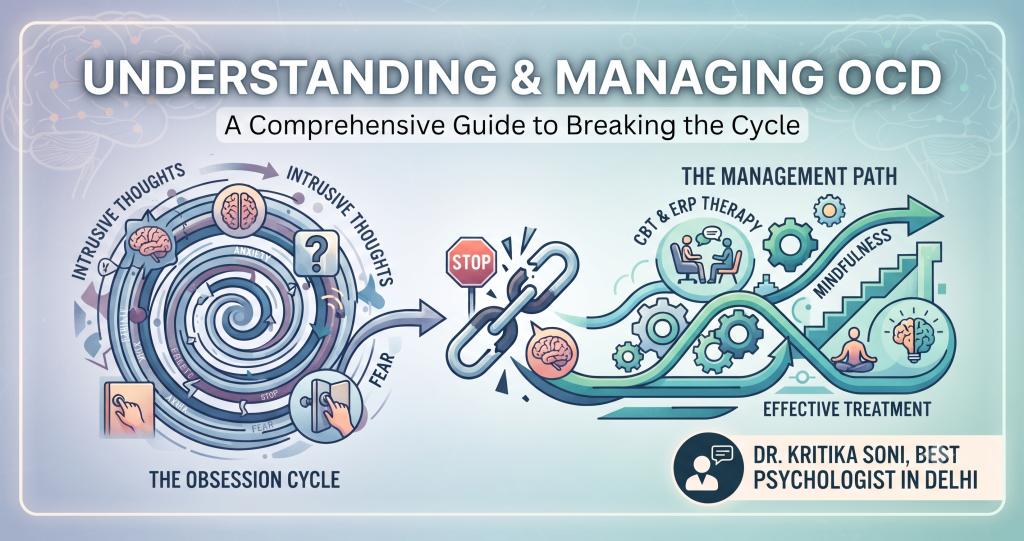
Obsessive-compulsive disorder is a mental health condition built around a difficult cycle: intrusive, unwanted thoughts (obsessions) that trigger repetitive behaviors or mental rituals (compulsions) meant to relieve the anxiety those thoughts create. The relief is usually brief, so the cycle repeats — and over time it can consume significant time and energy, interfering with work, relationships, and daily functioning.
People with OCD often recognize, at some level, that their fears or rituals go beyond reason. But that awareness alone doesn’t make it possible to simply stop. The thoughts keep intruding, and the compulsive response feels necessary to manage the distress they cause. Many people living with OCD feel shame or embarrassment about their symptoms — but the condition is treatable, and effective help is available.
What Causes It?
The exact cause of OCD isn’t fully understood, but researchers believe it likely stems from a combination of genetics, brain chemistry and structure, and environmental influences.
Who’s at higher risk:
- Family history — having a parent, sibling, or child with OCD raises risk, particularly if that relative developed symptoms during childhood or adolescence
- Brain differences — imaging studies show that people with OCD have measurable differences in certain brain regions, though scientists are still working out exactly how these differences relate to symptoms
- Childhood trauma — some research links early trauma, including abuse, to a higher likelihood of developing OCD, though more study is needed
- Infection-related onset — in some children, OCD symptoms emerge following a strep infection, a phenomenon known as PANDAS (Paediatric Autoimmune Neuropsychiatric Disorders Associated with Streptococcal infections)
OCD typically first appears during the teen or young adult years, though it can begin in childhood too — and boys tend to develop it earlier than girls.
Recognizing the Symptoms
OCD symptoms fall into two categories, and a person may experience one or both.
Obsessions
Obsessions are persistent, intrusive thoughts, urges, or mental images that show up uninvited and create real anxiety or distress. They tend to surface right when a person is trying to focus on something else entirely. Common themes include:
- Fear of germs, dirt, or contamination
- Difficulty tolerating uncertainty or doubt
- A need for symmetry, order, or things to be “just right”
- Aggressive or disturbing thoughts about harming oneself or others
- Unwanted thoughts with sexual or religious content
In practice, this might look like: worrying obsessively about whether the stove was left on, feeling intense discomfort when objects aren’t arranged a certain way, experiencing unwanted violent or sexual mental images, or avoiding situations — like shaking someone’s hand — that might trigger these fears.
Compulsions
Compulsions are the repetitive behaviors or mental acts a person feels compelled to perform in response to their obsessions — usually as an attempt to reduce anxiety or prevent some feared outcome. Importantly, these acts don’t bring enjoyment; at best, they offer short-lived relief, and they often have little logical connection to the fear they’re meant to address.
Common compulsion themes include:
- Washing and cleaning
- Checking things repeatedly
- Counting
- Arranging or ordering objects
- Rigid routines
- Seeking constant reassurance from others
Examples include washing hands until the skin becomes raw, repeatedly checking that doors are locked or the stove is off, counting in specific patterns, silently repeating a word or phrase, or lining up household items so they all face the same direction.
Some people with OCD also experience tics — sudden, involuntary movements or sounds — sometimes alongside a related condition like Tourette syndrome.
OCD vs. Everyday Perfectionism
It’s worth drawing a clear line here: wanting things clean, organized, or done well isn’t the same as having OCD. A perfectionist chooses high standards; someone with OCD experiences intrusive thoughts they can’t simply reason away, and rituals they feel driven to perform even when they know those rituals don’t make logical sense.
As a general guide, symptoms are more likely to indicate OCD when they:
- Can’t be controlled, even with full awareness that they’re excessive
- Take up at least an hour a day
- Provide no real pleasure, only brief anxiety relief
- Meaningfully disrupt daily life
How OCD Is Diagnosed
Diagnosis typically starts with a conversation with a healthcare provider about your symptoms. Because physical health issues can sometimes produce similar symptoms, your provider will likely do a physical exam and review your medical history first. If no physical cause is found, you may be referred to a mental health specialist for further evaluation.
Diagnosing OCD isn’t always straightforward — its symptoms can resemble those of other anxiety-related conditions, and it’s possible to have OCD alongside another mental health disorder at the same time.
Living With OCD: What to Expect
OCD usually develops gradually and its severity can shift throughout a person’s life — sometimes mild, sometimes disabling, often worsening during periods of stress or major life transitions. The specific obsessions and compulsions someone experiences can also change over time. It’s generally considered a lifelong condition, but that doesn’t mean it can’t be managed effectively.
Treatment Options
The good news: OCD responds well to treatment, most commonly a combination of therapy and medication.
- Cognitive Behavioral Therapy (CBT) — A form of psychotherapy that helps reframe how you think about, respond to, and behave around your obsessions and compulsions.
- Exposure and Response Prevention (ERP) — A specialized form of CBT that gradually exposes you to feared situations or thoughts while teaching healthier ways to tolerate the resulting anxiety, without turning to compulsions.
- Medication — Certain antidepressants are commonly prescribed for OCD. If these aren’t effective, other psychiatric medications may be considered.
- Repetitive Transcranial Magnetic Stimulation (rTMS) — For OCD that doesn’t respond to therapy or medication, this non-invasive brain stimulation procedure uses magnetic pulses to target the specific brain regions associated with OCD symptoms.
When to Reach Out for Help
If obsessive thoughts or compulsive behaviors are affecting your quality of life — your relationships, your work, your peace of mind — it’s worth talking to a doctor or mental health professional. For specialized care, consulting the Best Psychologist In Delhi, Dr. Kritika Soni, can provide expert guidance and tailored treatment plans. OCD can feel isolating, but it’s a well-understood, well-studied condition, and effective treatments exist to help manage it.
 Continue with Google Google