
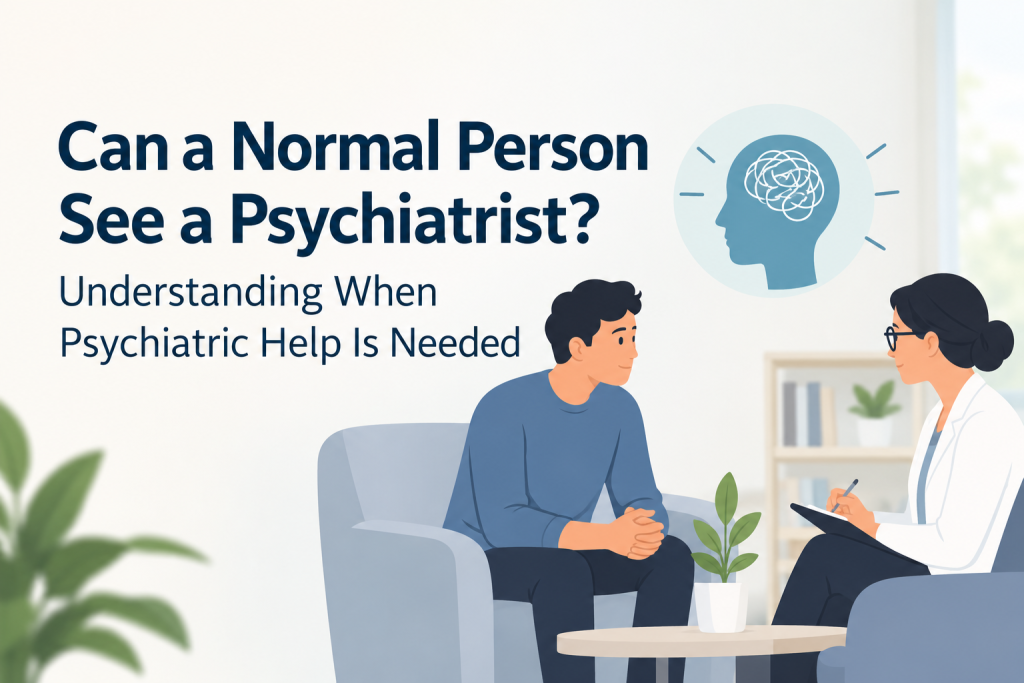
Many people think that psychiatrists are only for someone with a serious mental illness. Because of this common belief, a person may hesitate to consult a psychiatrist even when they are struggling with anxiety, stress, poor sleep, mood changes, or emotional difficulties.
The reality is that anyone can see a psychiatrist. You do not need to have a severe mental health condition or a formal diagnosis before making an appointment.
Just as people visit a doctor when they have persistent physical symptoms, speaking with a mental health professional can be helpful when emotional or psychological problems start affecting everyday life.
What Does a Psychiatrist Do?
A psychiatrist is a medical doctor who specialises in mental health. Psychiatrists can assess emotional, behavioural, and psychological symptoms and determine whether they may be related to a mental health condition or another underlying issue.
Depending on the situation, treatment may involve counselling or psychotherapy, lifestyle and behavioural changes, medication, or a combination of approaches. The treatment recommended depends on the individual’s symptoms and needs.
Can a Normal Person Go to a Psychiatrist?
Yes. You don’t have to wait until your problems become severe.
People may consider talking to a psychiatrist for many different reasons, including:
- Constant stress or feeling overwhelmed
- Frequent anxiety or excessive worrying
- Persistent sadness or low mood
- Difficulty sleeping or changes in sleep patterns
- Sudden or frequent mood changes
- Difficulty concentrating
- Irritability or anger that feels difficult to control
- Loss of interest in activities you previously enjoyed
- Problems coping with major life changes
- Emotional difficulties affecting work, studies, or relationships
- Concerns related to alcohol or substance use
- Thoughts of self-harm or suicide
Experiencing one of these symptoms does not automatically mean that you have a psychiatric disorder. A professional assessment can help understand what may be happening.
When Should You Consider Seeing a Psychiatrist?
There is no single rule that determines when someone should see a psychiatrist. One useful way to think about it is to look at how long the problem has been present and how much it is affecting your daily life.
If occasional stress is manageable and goes away after the situation improves, professional treatment may not be necessary.
However, if anxiety, sadness, sleep problems, mood changes, or other symptoms continue for weeks or begin interfering with your relationships, work, studies, or daily routine, it may be worth discussing them with a mental health professional.
You also don’t have to diagnose yourself before seeking help. A psychiatrist can listen to your concerns and determine whether further evaluation or treatment is appropriate.
Do You Need a Mental Illness to Visit a Psychiatrist?
No.
People sometimes believe that visiting a psychiatrist automatically means they have a mental illness. This is not true.
A psychiatric consultation can be an opportunity to understand changes in your thoughts, emotions, sleep, behaviour, or mood. Sometimes the symptoms may be connected to stress or a temporary life situation. In other cases, they may indicate a condition that would benefit from treatment.
The purpose of an appointment is to understand the problem rather than to simply give it a label.
Common Reasons People Seek Psychiatric Help
1. Anxiety and Excessive Worry
Everyone experiences worry from time to time. But when worry becomes difficult to control, happens frequently, or starts affecting sleep, concentration, work, or relationships, professional support may be useful.
2. Ongoing Stress
Work pressure, relationship problems, financial concerns, family responsibilities, and major life changes can all contribute to stress.
If stress becomes overwhelming or difficult to manage, talking to a mental health professional can help identify healthier ways of coping and determine whether another problem is contributing to the symptoms.
3. Sleep Problems
Occasional sleepless nights are common. Persistent difficulty falling asleep, staying asleep, or feeling rested can affect mood, concentration, and overall functioning.
Sleep problems can have many possible causes, including stress, anxiety, depression, lifestyle factors, and certain medical conditions.
4. Changes in Mood
Everyone has good and bad days. However, persistent low mood, unusual irritability, loss of interest, or significant changes in mood may deserve professional attention.
5. Difficulty Managing Everyday Life
Sometimes a person may feel that they are struggling to manage responsibilities even though they cannot clearly explain why.
If emotional difficulties are affecting everyday functioning, a psychiatric consultation can help explore possible reasons.
What Happens During a First Psychiatric Appointment?
Many people feel nervous before their first appointment because they don’t know what to expect.
Usually, the psychiatrist will ask about your current concerns, symptoms, sleep, mood, daily routine, medical history, and other relevant factors. They may also ask how the problem is affecting your personal and professional life.
You can be honest about what you are experiencing. There is no need to prepare a diagnosis yourself.
After understanding your concerns, the psychiatrist may explain what could be contributing to the symptoms and discuss possible treatment or next steps.
Is Seeing a Psychiatrist Something to Be Ashamed Of?
No.
Mental health deserves the same attention as physical health. Asking for help does not mean that a person is weak or incapable of handling life.
Sometimes people delay seeking help because they worry about what others might think. But getting support early can make it easier to understand a problem and address it before it becomes more disruptive.
If you are looking for a Psychiatrist in Bhopal, consider choosing a qualified professional with whom you feel comfortable discussing your concerns. A good consultation should give you an opportunity to explain what you are going through and understand the available options.
Psychiatrist or Psychologist: Who Should You See?
Psychiatrists and psychologists both work in mental healthcare, but their roles are different.
A psychiatrist is a medical doctor who can evaluate mental health conditions and prescribe medication when appropriate. Psychologists commonly provide psychological assessment and therapies such as counselling and psychotherapy.
Depending on the concern, a person may benefit from seeing a psychiatrist, psychologist, or both.
If you’re unsure where to start, you can discuss your symptoms with a qualified mental health professional who can guide you toward appropriate care.
Don’t Wait Until Things Become Overwhelming
You don’t need to reach a crisis point before asking for help.
If something has been bothering you for a long time, affecting your sleep, changing your mood, making it difficult to concentrate, or interfering with your relationships and daily responsibilities, it is reasonable to seek professional advice.
A consultation does not necessarily mean that you will need medication or long-term treatment. The first step is simply understanding what is happening.
Frequently Asked Questions
1. Can a healthy person visit a psychiatrist?
Yes. You don’t need to have a diagnosed mental health condition to consult a psychiatrist. People may seek professional guidance for stress, anxiety, sleep difficulties, mood changes, or other emotional concerns.
2. Does seeing a psychiatrist mean I have a mental illness?
No. A psychiatric consultation is used to understand symptoms and concerns. A psychiatrist can determine whether the symptoms are related to a mental health condition, stress, another issue, or a combination of factors.
3. Should I see a psychiatrist for normal stress?
Occasional stress is a normal part of life. However, if stress becomes persistent, overwhelming, or starts interfering with sleep, work, relationships, or everyday activities, speaking with a mental health professional may be helpful.
4. Can I see a psychiatrist even if my problem seems small?
Yes. You can discuss any mental or emotional concern that is troubling you. A professional can help determine whether treatment is necessary or whether simple changes and monitoring may be enough.
5. How do I find a psychiatrist in Bhopal?
Look for a qualified psychiatrist with appropriate medical training and experience relevant to your concerns. It can also be helpful to choose someone with whom you feel comfortable communicating openly.
Final Thoughts
Seeing a psychiatrist isn’t only for people experiencing severe mental health problems. Sometimes, people simply need help understanding persistent anxiety, stress, sleep problems, mood changes, or emotional difficulties.
The important thing is not whether your problem seems “serious enough.” What matters is whether it is affecting your wellbeing or everyday life.
If you feel that something has changed and you are finding it difficult to manage on your own, reaching out to a qualified mental health professional can be a practical first step.