
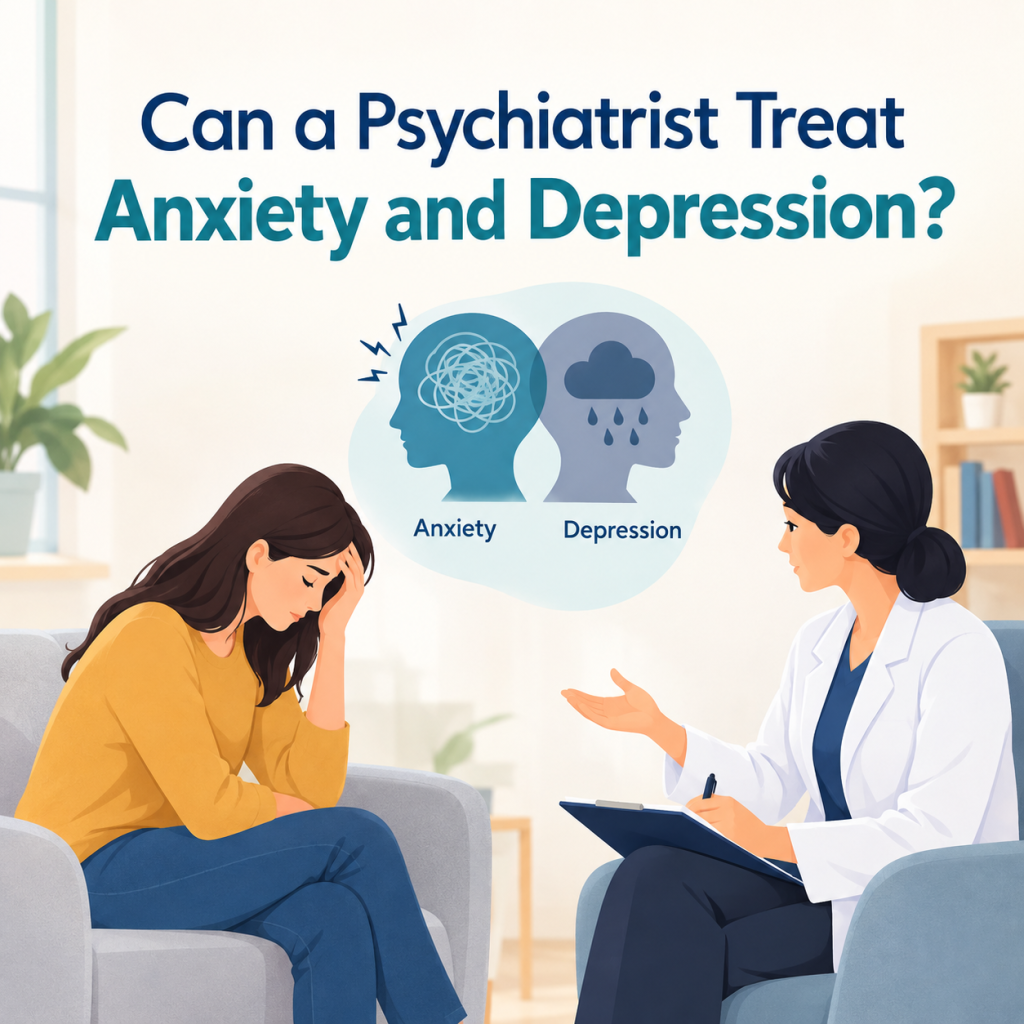
Anxiety and depression are common mental health concerns that can affect a person’s thoughts, emotions, sleep, relationships, work, and everyday life. While everyone experiences stress or occasional sadness, persistent anxiety or low mood may need professional attention.
A psychiatrist is a medical doctor who specialises in mental health conditions. They can assess symptoms, identify possible causes, provide a diagnosis, and recommend appropriate treatment. So, can a psychiatrist treat anxiety and depression? Yes. Psychiatrists commonly evaluate and treat both anxiety disorders and depression.
What Does a Psychiatrist Do for Anxiety and Depression?
When you visit a psychiatrist, the first step is usually a detailed assessment. The doctor may ask about your symptoms, sleep, appetite, mood, stress levels, daily routine, medical history, medications, and how your symptoms are affecting your life.
This assessment helps the psychiatrist understand whether you may be experiencing anxiety, depression, both conditions together, or another mental health concern.
Depending on your individual situation, treatment may include medication, psychotherapy or counselling, lifestyle changes, or a combination of approaches.
How Can a Psychiatrist Help With Anxiety?
Anxiety can appear in different forms. Some people experience constant worrying, while others may have panic attacks, excessive fear, restlessness, difficulty concentrating, or physical symptoms such as a racing heartbeat and muscle tension.
A psychiatrist can evaluate the severity and type of anxiety and recommend an appropriate treatment plan.
Treatment may involve:
- Medicines when clinically appropriate
- Psychotherapy or counselling
- Techniques to manage anxious thoughts
- Stress-management strategies
- Sleep and lifestyle improvements
- Regular follow-up to monitor progress
The treatment approach depends on the individual’s symptoms and needs.
How Can a Psychiatrist Help With Depression?
Depression is more than feeling sad for a few days. Persistent low mood, loss of interest in activities, changes in sleep or appetite, tiredness, difficulty concentrating, feelings of worthlessness, and hopelessness can be signs that professional help may be needed.
A psychiatrist can assess these symptoms and determine whether they are related to depression or another condition.
Depending on the assessment, treatment may include medication, psychotherapy, lifestyle changes, or a combination of treatments. Regular follow-ups can also help the psychiatrist understand how a person is responding to treatment and make adjustments when necessary.
Can Anxiety and Depression Occur Together?
Yes. Anxiety and depression can occur at the same time. A person may feel persistently worried while also experiencing low mood, tiredness, loss of interest, or difficulty enjoying everyday activities.
When both conditions are present, getting a proper assessment is important because treatment should address the individual’s overall symptoms rather than focusing on only one concern.
A Psychiatrist for Anxiety & Depression in Bhopal can assess your symptoms and help determine what type of professional care may be appropriate.
When Should You Consider Seeing a Psychiatrist?
It may be useful to speak with a mental health professional if anxiety or depression:
- Continues for several weeks or keeps returning
- Interferes with work, studies, relationships, or daily activities
- Makes it difficult to sleep or concentrate
- Causes frequent panic or overwhelming worry
- Leads to significant changes in appetite or energy
- Makes you lose interest in activities you previously enjoyed
- Feels difficult to manage on your own
Seeking help does not mean that your symptoms are necessarily severe. Early professional guidance can help you understand what you are experiencing and explore suitable treatment options.
Choosing a Psychiatrist in Bhopal
Finding the right mental health professional can make the process of seeking help more comfortable. When looking for a Psychiatrist in Bhopal, consider the doctor’s qualifications, experience, areas of practice, approach to treatment, and whether you feel comfortable discussing your concerns with them.
A psychiatrist can also explain the available treatment options and answer questions about medication or other forms of mental health care.
Final Thoughts
Anxiety and depression are treatable mental health conditions, and you do not have to manage persistent symptoms alone. A psychiatrist can provide a medical assessment, help identify the underlying concerns, and recommend an appropriate treatment approach based on your individual needs.
If anxiety, low mood, or related symptoms are affecting your everyday life, speaking with a qualified mental health professional can be an important step toward understanding your symptoms and getting appropriate support.
Frequently Asked Questions (FAQs)
1. Can a psychiatrist treat both anxiety and depression?
Yes. Psychiatrists are medical doctors who diagnose and treat a range of mental health conditions, including anxiety disorders and depression. They can assess your symptoms and recommend an appropriate treatment plan.
2. Should I see a psychiatrist for anxiety or depression?
If anxiety or depression is persistent, worsening, or affecting your sleep, work, relationships, or daily activities, it may be helpful to consult a psychiatrist or another qualified mental health professional.
3. Can anxiety and depression happen at the same time?
Yes. Anxiety and depression can occur together. Some people may experience excessive worry, restlessness, or fear along with low mood, tiredness, loss of interest, or difficulty concentrating.
4. What treatment does a psychiatrist provide for anxiety and depression?
Treatment depends on the individual’s symptoms and needs. It may include medication, psychotherapy or counselling, lifestyle changes, or a combination of these approaches. A psychiatrist can discuss the available options after an assessment.
5. How do I find a Psychiatrist for Anxiety & Depression in Bhopal?
When choosing a Psychiatrist for Anxiety & Depression in Bhopal, consider their qualifications, experience, areas of practice, and approach to mental health care. It is also important to choose a professional with whom you feel comfortable discussing your concerns.
6. How do I choose a Psychiatrist in Bhopal?
When looking for a Psychiatrist in Bhopal, you can consider the doctor’s qualifications, clinical experience, areas of specialisation, treatment approach, and patient communication. A consultation can also help you understand whether the doctor is suitable for your needs.
7. Can anxiety and depression be treated without medication?
Depending on the severity and type of symptoms, some people may benefit from psychotherapy, counselling, lifestyle changes, or other non-medication approaches. A mental health professional can help determine what may be appropriate for you.
8. When should I seek professional help for anxiety or depression?
Consider seeking professional help when symptoms persist, interfere with everyday life, affect sleep or concentration, or become difficult to manage on your own. If you experience thoughts of self-harm or suicide, seek urgent professional or emergency support.