
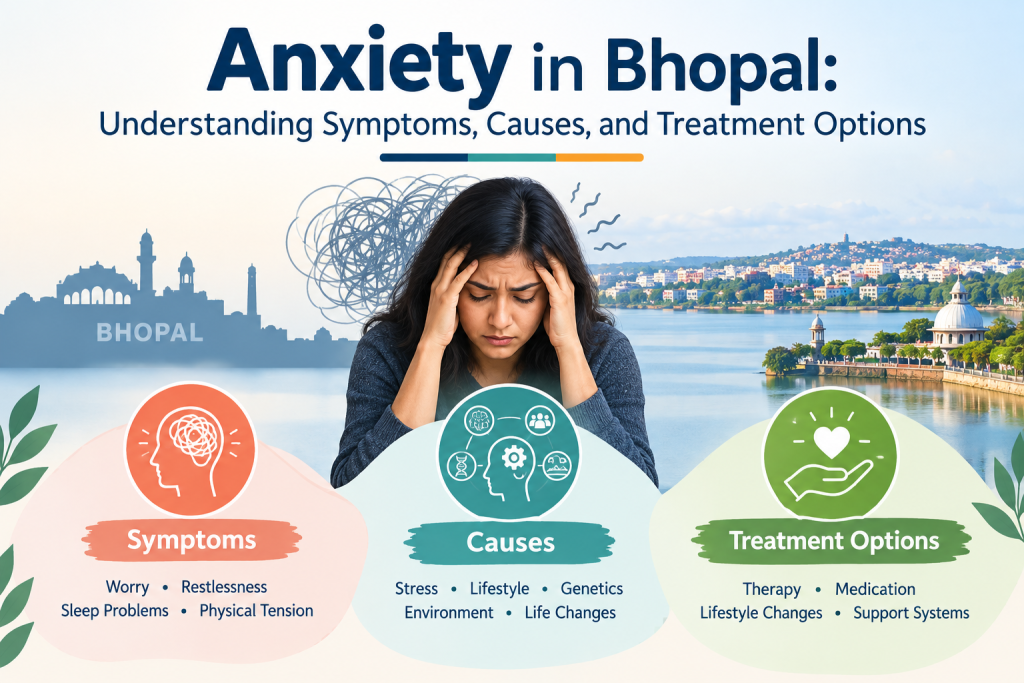
Feeling worried or nervous from time to time is a normal part of life. Stress related to work, studies, relationships, finances, or major life changes can make anyone feel anxious. However, when anxiety becomes frequent, difficult to control, or starts affecting everyday life, it may be a sign of an anxiety disorder.
Anxiety can affect the way a person thinks, feels, sleeps, works, and interacts with others. Some people may experience constant worrying, while others may notice physical symptoms such as a fast heartbeat, sweating, restlessness, or difficulty breathing.
The good news is that anxiety can be managed with the right understanding, professional guidance, and treatment. If you are experiencing persistent anxiety, consulting a mental health professional can help identify the underlying concerns and determine an appropriate treatment approach.
What Is Anxiety?
Anxiety is the body’s natural response to stress or situations that feel threatening or uncertain. A certain amount of anxiety can be helpful because it can make us more alert and prepared.
However, anxiety becomes a concern when the fear or worry is excessive, happens frequently, or continues even when there is no immediate danger.
Anxiety disorders can take different forms, including:
- Generalised anxiety disorder
- Panic disorder
- Social anxiety disorder
- Specific phobias
- Separation anxiety
- Anxiety associated with other mental health conditions
Each person can experience anxiety differently, which is why proper assessment is important.
Common Symptoms of Anxiety
Anxiety can affect both mental and physical health. Common symptoms may include:
- Constant or excessive worrying
- Feeling restless or unable to relax
- Difficulty concentrating
- Irritability
- Feeling nervous or on edge
- Trouble falling or staying asleep
- Rapid heartbeat
- Sweating
- Trembling or shaking
- Muscle tension
- Stomach discomfort
- Shortness of breath
- Feeling that something bad may happen
Not everyone experiences all of these symptoms. Their intensity can also vary from person to person.
What Causes Anxiety?
There is usually no single cause of anxiety. It can develop due to a combination of biological, psychological, and environmental factors.
Ongoing Stress
Long-term pressure at work, school, home, or in personal relationships can make it difficult for the mind and body to relax.
Major Life Changes
Events such as changing jobs, moving to a new place, relationship difficulties, financial concerns, or other major changes can increase anxiety.
Poor Sleep
Lack of quality sleep can affect emotional regulation and make it harder to cope with everyday stress.
Caffeine and Lifestyle Factors
High caffeine intake, irregular routines, and limited physical activity may worsen anxiety symptoms in some people.
Previous Experiences
Difficult or stressful experiences can sometimes influence how a person responds to similar situations later.
Family and Biological Factors
Some people may have a greater vulnerability to anxiety because of genetic or biological factors.
When Should You Seek Help for Anxiety?
Occasional worry does not necessarily mean that someone has an anxiety disorder. It may be time to seek professional help when anxiety:
- Happens frequently or feels difficult to control
- Interferes with work, studies, or relationships
- Affects sleep or daily routines
- Causes frequent panic or intense fear
- Leads to avoiding normal activities
- Causes significant physical symptoms
- Continues for a long period despite attempts to manage it
Seeking help does not mean that your symptoms are severe. Early support can help a person understand what they are experiencing and learn appropriate ways to manage it.
If anxiety occurs along with persistent sadness, low mood, loss of interest, or other emotional difficulties, it may be helpful to consult a Psychiatrist for Anxiety & Depression in Bhopal for a proper evaluation.
How Is Anxiety Treated?
Treatment depends on the type and severity of anxiety and the individual’s overall mental health. A mental health professional may recommend one or a combination of approaches.
Psychological Therapy
Therapy can help people understand anxious thoughts, identify patterns that contribute to anxiety, and develop healthier coping strategies. Cognitive behavioural therapy (CBT) is one commonly used approach for several anxiety disorders.
Medication
In some cases, a psychiatrist may recommend medication to help manage anxiety symptoms. Medication should only be taken under professional guidance.
Lifestyle Changes
Healthy daily habits can support anxiety management. These may include:
- Maintaining a regular sleep schedule
- Staying physically active
- Reducing excessive caffeine
- Eating regular, balanced meals
- Practising relaxation or breathing exercises
- Limiting excessive screen and social media use
- Staying connected with supportive people
Lifestyle changes can be helpful, but persistent or severe anxiety may require professional treatment as well.
Why Choose Dr. Vijay Savita for Anxiety in Bhopal?
When anxiety begins to interfere with daily life, speaking with a mental health professional can provide clarity and appropriate guidance.
Dr. Vijay Savita provides psychiatric care for individuals experiencing anxiety and related mental health concerns in Bhopal. The approach can involve understanding the person’s symptoms, personal circumstances, and overall mental health before deciding on a suitable treatment plan.
A Psychiatrist in Bhopal can assess whether symptoms are related to anxiety, depression, or another mental health concern and suggest an appropriate course of care.
Choosing professional care can be helpful because anxiety does not look the same for everyone. A proper evaluation can help distinguish everyday stress from an anxiety disorder and identify whether therapy, medication, lifestyle changes, or a combination of approaches may be appropriate.
If anxiety is affecting your sleep, work, relationships, concentration, or everyday activities, consulting Dr. Vijay Savita can be a useful step toward understanding your symptoms and getting appropriate support.
Simple Ways to Manage Anxiety in Daily Life
Along with professional treatment when needed, some everyday habits may help reduce stress and improve emotional wellbeing:
- Follow a regular sleep routine – Try to maintain consistent sleeping and waking times.
- Stay physically active – Walking, exercise, or other physical activities can support overall mental wellbeing.
- Take breaks – Give yourself short breaks during stressful work or study periods.
- Practise slow breathing – Controlled breathing can help you relax when you feel overwhelmed.
- Reduce excessive caffeine – Coffee, energy drinks, and other caffeinated beverages may increase nervousness in some people.
- Talk to someone you trust – Sharing your concerns can make stressful situations easier to handle.
- Avoid self-diagnosis – If anxiety is persistent or interfering with your life, speak with a qualified mental health professional.
Book Your Consultation Today
If anxiety is affecting your daily life, professional guidance can help you understand your symptoms and explore suitable treatment options.
In-clinic consultation
Consultation Fee: ₹600
Location: Bhopal
If you are looking for a Psychiatrist for Anxiety & Depression in Bhopal, you can book an in-clinic consultation.
Frequently Asked Questions About Anxiety
1. What is the difference between normal stress and anxiety?
Normal stress is often connected to a specific situation and may improve when the situation is resolved. Anxiety can continue even when there is no immediate threat and may become difficult to control or interfere with daily life.
2. Can anxiety affect sleep?
Yes. Persistent worrying and physical symptoms of anxiety can make it difficult to fall asleep or stay asleep. Poor sleep can also make anxiety symptoms feel more difficult to manage.
3. Can anxiety cause physical symptoms?
Yes. Anxiety can cause symptoms such as a racing heartbeat, sweating, trembling, muscle tension, stomach discomfort, and shortness of breath.
4. Is anxiety treatable?
Yes. Many anxiety disorders can be managed with appropriate treatment. Depending on the individual, treatment may involve therapy, medication, lifestyle changes, or a combination of these approaches.
5. When should I see a psychiatrist for anxiety?
Consider speaking with a psychiatrist when anxiety is persistent, difficult to control, affects your sleep or daily activities, causes frequent panic, or interferes with work, studies, or relationships.
6. Can lifestyle changes help with anxiety?
Healthy sleep, regular physical activity, balanced meals, reduced caffeine, relaxation techniques, and social support may help manage anxiety. However, lifestyle changes may not be enough for everyone, particularly when symptoms are persistent or severe.
7. Can anxiety and depression occur together?
Yes. Anxiety and depression can occur at the same time in some people. Because symptoms can overlap, a professional assessment can help understand what a person is experiencing and determine an appropriate treatment approach.
8. How can I find treatment for anxiety in Bhopal?
If you are experiencing persistent anxiety, you can consult a Psychiatrist in Bhopal for an evaluation. The psychiatrist can understand your symptoms and recommend an appropriate treatment approach based on your individual needs.
Conclusion
Anxiety is common, but living with constant worry, fear, restlessness, or physical discomfort can make everyday life challenging. Understanding the symptoms and recognising when professional support may be needed is an important first step.
With appropriate care and treatment, many people are able to manage anxiety symptoms and improve their daily quality of life. If you are experiencing anxiety or depression, professional guidance can help you understand your symptoms and explore suitable treatment options in Bhopal.