
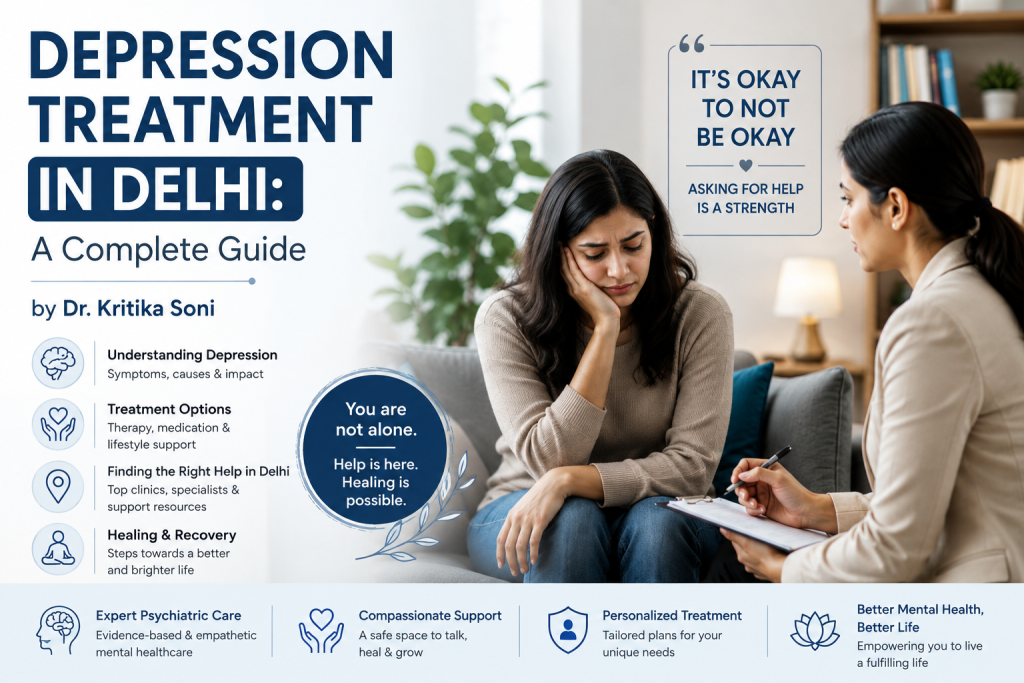
Depression Treatment in Delhi: A Complete Guide
Is Depression Treatable?
Quick answer: Depression is a treatable medical condition, not a personal failing. The most effective depression treatment usually combines psychotherapy (such as CBT), antidepressant medication when clinically indicated, and lifestyle changes — tailored to the individual by a qualified psychiatrist. Most people notice meaningful improvement within 4–8 weeks of starting the right treatment plan.
If you’re searching for depression treatment in Delhi, this guide — from Dr. Kritika Soni, Consultant Psychiatrist practicing in Mehrauli, Delhi — walks through what depression actually is, how it’s diagnosed, and which treatments work, so you know what to expect before your first consultation.
What Is Depression?
Depression (clinically called Major Depressive Disorder) is a mood disorder that affects how you feel, think, and handle daily activities. It goes beyond ordinary sadness or a temporary low mood — it’s a persistent state that can affect sleep, appetite, energy, concentration, and the ability to feel pleasure.
What Are the Symptoms of Depression?
Common symptoms include:
- Persistent sadness, emptiness, or hopelessness lasting two weeks or more
- Loss of interest in activities once enjoyed
- Fatigue or low energy, even after rest
- Sleeping too much or too little
- Changes in appetite or weight
- Difficulty concentrating or making decisions
- Feelings of worthlessness or excessive guilt
- Thoughts of death or self-harm
If several of these symptoms are present most days for two weeks or longer, it’s worth speaking with a psychiatrist for a proper evaluation.
How Is Depression Diagnosed?
Diagnosis is clinical — there’s no single blood test for depression. A psychiatrist typically:
- Takes a detailed history of your symptoms, their duration, and impact on daily life
- Rules out medical causes (thyroid issues, vitamin deficiencies, certain medications)
- Uses standardized screening tools (such as PHQ-9) alongside clinical judgment
- Assesses severity and any risk factors, including suicidal ideation
How Is Depression Treated?
Effective depression treatment is rarely one-size-fits-all. Dr. Kritika Soni typically draws from three pillars, adjusted to each patient:
1. Psychotherapy (Talk Therapy)
- Cognitive Behavioral Therapy (CBT) — helps identify and reframe negative thought patterns
- Interpersonal Therapy (IPT) — addresses relationship and life-transition triggers
- Especially effective for mild-to-moderate depression, and often combined with medication for moderate-to-severe cases
2. Medication
- Antidepressants (SSRIs, SNRIs, and others) help correct the neurochemical imbalances linked to depression
- Typically take 2–6 weeks to show full effect
- Prescribed and monitored by a psychiatrist, with dosage adjusted based on response and side effects
3. Lifestyle and Supportive Measures
- Regular physical activity, sleep hygiene, and structured daily routines
- Reducing alcohol and substance use
- Building a support system — family involvement is often part of the treatment plan
For treatment-resistant depression, additional options like combination therapy or referral for advanced interventions may be discussed.
How Long Does Depression Treatment Take?
Many patients report improvement in mood and energy within 4–8 weeks of starting treatment, though full recovery and relapse prevention typically involve 6–12 months of continued care, including therapy check-ins and, where prescribed, medication management.
When Should You See a Psychiatrist for Depression?
Consider a consultation if:
- Low mood has lasted more than two weeks
- Daily functioning — work, relationships, self-care — is being affected
- You’ve had thoughts of self-harm or suicide (seek help immediately in this case)
- Self-help strategies haven’t provided relief
Frequently Asked Questions
Is depression treatable without medication? Yes — mild depression often responds well to psychotherapy and lifestyle changes alone. A psychiatrist can advise whether medication would meaningfully help in your specific case.
Can depression come back after treatment? It can. This is why continued follow-up and relapse-prevention strategies are an important part of a full treatment plan, even after symptoms improve.
Is depression treatment confidential? Yes. Psychiatric consultations are bound by medical confidentiality, and treatment plans are discussed privately between you and your doctor.
About Dr. Kritika Soni Dr. Kritika Soni is a Consultant Psychiatrist with 15+ years of clinical experience, practicing in Mehrauli, Delhi. She offers in-person and online consultations for depression, anxiety, and other mental health concerns.
If you’re experiencing thoughts of self-harm or suicide, please reach out immediately to Dr. kritika Soni , Best Psychiatrist in Delhi.
 Continue with Google Google