
Have you ever gone to bed feeling tired, only to find yourself staring at the ceiling for hours? Or perhaps you fall asleep easily but wake up in the middle of the night and cannot get back to sleep. Occasional sleep difficulties are common, but when they happen regularly, they can start affecting your mood, concentration, energy, and overall quality of life.
Insomnia is one of the most common sleep problems people experience. It can happen for many different reasons, and sometimes there is more than one factor involved.
Understanding what may be behind your sleep problems is the first step toward getting better rest.
What Is Insomnia?
Insomnia is a sleep disorder in which a person has difficulty falling asleep, staying asleep, or getting enough restful sleep.
Someone with insomnia may:
- Take a long time to fall asleep
- Wake up several times during the night
- Wake up much earlier than expected
- Feel tired even after spending enough time in bed
- Have difficulty concentrating during the day
- Feel irritated, anxious, or emotionally drained
Insomnia can be short-term and may occur during stressful periods. However, when sleep difficulties continue for a longer period and happen regularly, they may need professional attention.
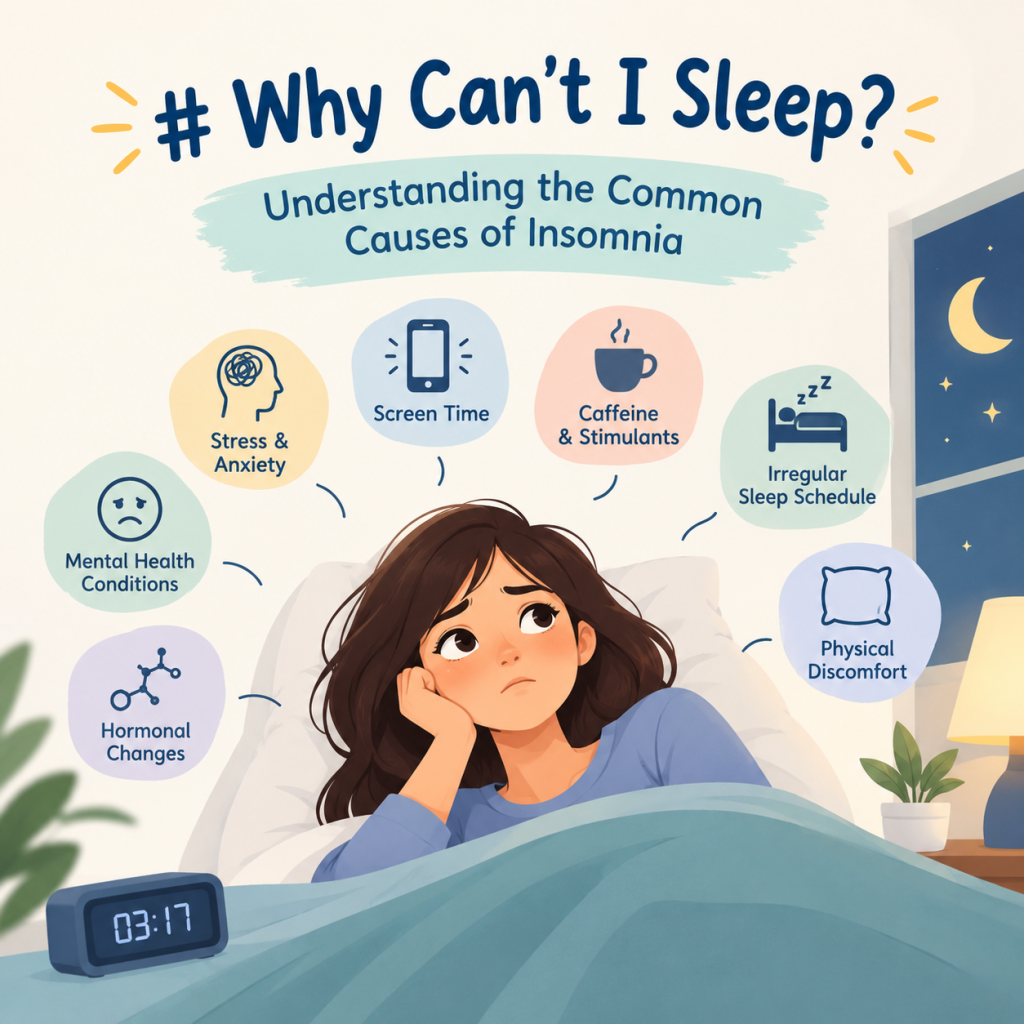
Why Can’t I Sleep? Common Causes of Insomnia
There is rarely just one reason for poor sleep. Your sleep can be affected by your thoughts, emotions, daily routine, physical health, environment, and even certain medications.
1. Stress and Overthinking
One of the most common reasons people struggle to sleep is stress.
Work pressure, family responsibilities, financial concerns, relationship difficulties, or major life changes can keep the mind active at night. You may feel physically tired but continue thinking about everything that happened during the day or worrying about what might happen tomorrow.
This can make it difficult for your brain to slow down enough for sleep.
2. Anxiety
Anxiety and sleep problems often go hand in hand. When you feel anxious, your mind may become filled with repeated thoughts, worries, or “what if” scenarios.
For some people, bedtime can actually make anxiety feel stronger because there are fewer distractions. This can create a cycle where worry affects sleep, and poor sleep then makes anxiety feel worse the next day.
3. Depression and Changes in Mood
Sleep and mental health are closely connected.
Some people experiencing depression may sleep much more than usual, while others may struggle to fall asleep or wake up very early in the morning. Changes in sleep can sometimes be an early sign that a person’s emotional health needs attention.
Persistent sleep problems along with sadness, loss of interest, low motivation, or feelings of hopelessness should not be ignored.
4. Poor Sleep Habits
Your daily routine can have a major effect on your ability to sleep.
Irregular bedtimes, sleeping late on weekends, taking long daytime naps, using your phone in bed, or spending too much time working from your bedroom can make it harder for your body to maintain a healthy sleep rhythm.
A consistent sleep schedule and a relaxing bedtime routine can help your body understand when it is time to wind down.
5. Too Much Caffeine
Caffeine can stay in the body for several hours. Coffee, tea, energy drinks, and some other beverages can make it harder to fall asleep, especially when consumed later in the day.
Some people are more sensitive to caffeine than others, so even an afternoon cup of coffee may affect nighttime sleep.
6. Excessive Screen Time
Phones, tablets, laptops, and television have become part of everyday life. However, spending a lot of time on screens before bed can make it harder to relax.
Beyond the light from screens, the content itself can keep your brain alert. Social media, work messages, videos, and news can all encourage continued mental stimulation when your body should be preparing for sleep.
7. Uncomfortable Sleeping Environment
Sometimes the problem is closer to home — literally.
A noisy bedroom, uncomfortable mattress, bright lights, excessive heat, or an irregular sleep environment can disturb sleep.
Creating a quiet, comfortable, and relaxing bedroom can make a noticeable difference for some people.
8. Physical Health Problems
Certain health conditions can interfere with sleep. Pain, breathing problems, hormonal changes, frequent urination, digestive problems, and other physical symptoms may cause repeated nighttime waking.
In such situations, improving sleep may also require addressing the underlying health concern.
9. Medications and Substances
Some medications can affect sleep as a side effect. Nicotine and other substances may also interfere with normal sleep patterns.
If you have noticed that your sleep changed after starting a medication, speak with your doctor rather than stopping the medication on your own.
Can Insomnia Affect Your Mental Health?
Yes. Poor sleep does more than make you feel tired the next morning.
Regular sleep difficulties can affect concentration, memory, motivation, patience, and emotional regulation. Over time, ongoing insomnia may also contribute to increased stress and make existing anxiety or mood-related problems more difficult to manage.
This is why sleep should be considered an important part of overall mental well-being.
What Can You Do to Improve Your Sleep?
Small changes to your daily routine can sometimes make a meaningful difference.
Try to maintain a regular bedtime and wake-up time, even on weekends. Limit caffeine later in the day and reduce screen use before bedtime. Keep your bedroom comfortable and try to use your bed primarily for sleep rather than work or extended phone use.
A calming nighttime routine can also help. Reading a book, listening to soft music, practicing relaxation exercises, or spending a few quiet minutes away from screens may help your mind slow down.
However, lifestyle changes are not always enough, especially when insomnia is connected to anxiety, depression, stress, or another underlying issue.
When Should You Seek Professional Help?
Occasional sleepless nights are usually not a major concern. But it may be time to seek professional guidance when sleep problems are happening regularly or are interfering with your everyday life.
Consider speaking with a mental health professional if:
- You regularly have difficulty falling or staying asleep
- You feel exhausted despite getting enough time in bed
- Poor sleep is affecting your work, studies, or relationships
- You are experiencing significant anxiety, stress, or low mood along with sleep problems
- You have been relying on sleeping pills or other substances to sleep
- Your sleep difficulties have continued for an extended period
Consulting a Psychiatrist in Chandigarh can be helpful when persistent sleep difficulties are affecting your daily life or are associated with anxiety, stress, depression, or other mental health concerns.
A Psychiatrist for Insomnia & Sleep Problems in Chandigarh can assess your symptoms, understand possible underlying factors, and recommend an appropriate treatment approach based on your individual needs.
Treatment may involve addressing anxiety or mood-related concerns, improving sleep habits, therapy, medication when appropriate, or a combination of approaches.
Don’t Ignore Persistent Sleep Problems
Not every bad night of sleep means you have insomnia. Everyone has nights when stress, travel, illness, or a busy schedule affects sleep.
The concern arises when poor sleep becomes a regular pattern.
Instead of simply trying to “push through” tiredness, it can be helpful to understand why your sleep is being affected. Identifying and addressing the underlying cause can make a real difference to both your sleep and your overall well-being.
For people looking for professional guidance, a Psychiatrist in Chandigarh can help evaluate persistent sleep concerns and identify whether an underlying mental health issue may be contributing to them.
When sleep difficulties continue despite healthy lifestyle changes, consulting a Psychiatrist for Insomnia & Sleep Problems in Chandigarh may help you understand your symptoms and explore suitable treatment options.
Frequently Asked Questions
- Why can’t I sleep even when I feel tired?
Stress, anxiety, an irregular sleep schedule, excessive screen use, caffeine, and other factors can keep your brain alert even when your body feels tired. - How do I know if I have insomnia?
Insomnia generally involves ongoing difficulty falling asleep, staying asleep, or getting restful sleep, along with daytime effects such as tiredness or poor concentration. - Can anxiety cause insomnia?
Yes. Anxiety can lead to racing thoughts and excessive worry at bedtime, making it difficult to relax and sleep. - Should I see a psychiatrist for sleep problems?
A psychiatrist may be helpful when sleep problems are persistent, significantly affecting daily life, or occurring alongside anxiety, depression, or other mental health concerns. - Can lifestyle changes improve insomnia?
Healthy sleep habits, a consistent sleep schedule, reducing caffeine, limiting late-night screen use, and creating a relaxing bedtime routine may help improve sleep. Persistent insomnia may require professional assessment.
Conclusion
Good sleep is not a luxury. It is an important part of physical and emotional health.
If you are regularly asking yourself, “Why can’t I sleep?”, it may be worth looking beyond the sleepless nights and considering what could be causing them. Stress, anxiety, mood changes, habits, physical health issues, and other factors can all play a role.
Understanding the cause of your sleep problems is often the first step toward finding the right support and getting back to more restful nights.