
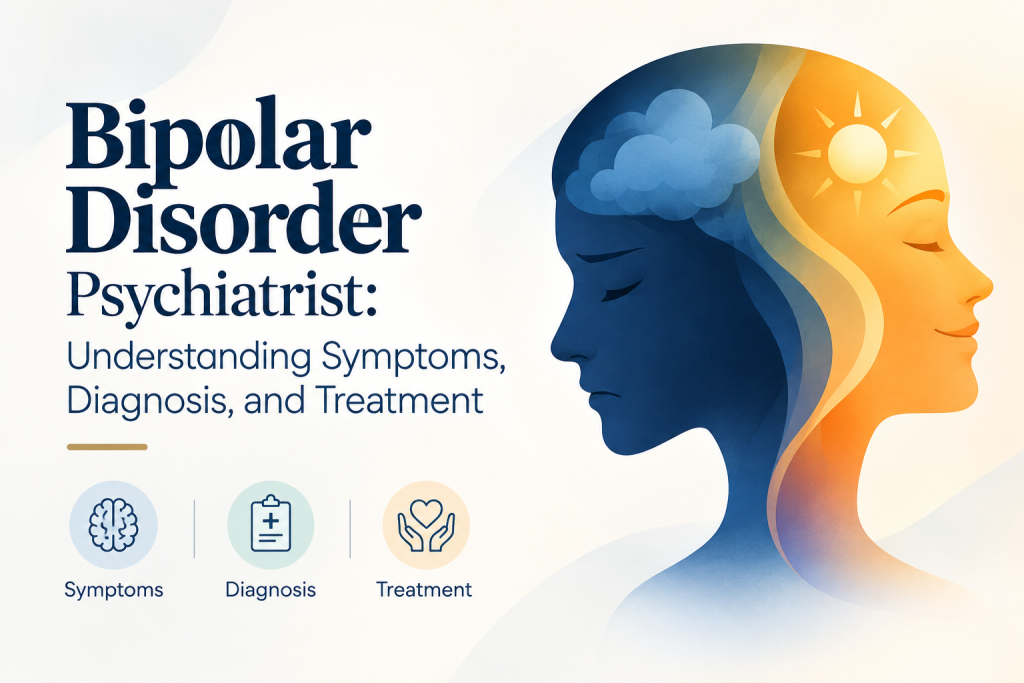
Bipolar disorder is a mental health condition that can affect a person’s mood, energy, sleep, behaviour, and everyday life. People with bipolar disorder may go through periods of very high energy, activity, or irritability and other periods of low mood, sadness, and lack of interest in daily activities.
These changes are more than the normal ups and downs that everyone experiences. They can sometimes affect relationships, work, studies, decision-making, and overall quality of life. Understanding the symptoms and getting the right professional support can make a meaningful difference.
A Bipolar Disorder Psychiatrist in Chandigarh can assess the pattern of symptoms, understand how they are affecting the person’s life, and suggest an appropriate treatment approach.
What Is Bipolar Disorder?
Bipolar disorder is a mood disorder characterised by episodes of elevated or unusually irritable mood and episodes of depression.
During an elevated mood episode, a person may feel extremely energetic, talkative, confident, or restless. They may sleep less than usual and still feel energetic. In some cases, they may make impulsive decisions or take risks without fully considering the consequences.
On the other hand, a depressive episode can bring persistent sadness, tiredness, low motivation, difficulty concentrating, changes in sleep or appetite, and a loss of interest in activities.
The symptoms and their severity can vary considerably from one person to another.
Common Signs and Symptoms of Bipolar Disorder
Recognising the symptoms can be the first step toward seeking appropriate help.
Symptoms of Mania or Hypomania
During periods of mania or hypomania, a person may:
- Feel unusually energetic or restless
- Need significantly less sleep
- Talk more quickly or more than usual
- Experience racing thoughts
- Feel unusually confident or optimistic
- Become easily distracted
- Take unnecessary risks
- Spend money impulsively
- Start many activities or projects at once
- Become unusually irritable
Mania can be severe and may significantly interfere with a person’s daily functioning. Hypomania is generally less severe but can still cause noticeable changes in behaviour and mood.
Symptoms of Depression
During a depressive episode, someone may experience:
- Persistent sadness or emptiness
- Loss of interest in things they previously enjoyed
- Low energy and tiredness
- Difficulty concentrating
- Changes in sleeping patterns
- Changes in appetite
- Feelings of guilt or worthlessness
- Social withdrawal
- Difficulty managing everyday responsibilities
- Feelings of hopelessness
Not everyone experiences the same symptoms, and the pattern can change over time.
What Causes Bipolar Disorder?
There is no single cause of bipolar disorder. Several factors may contribute to its development.
Genetics can play a role, particularly when there is a family history of mood disorders. Biological factors involving brain function and regulation of mood may also contribute.
Environmental factors, prolonged stress, major life changes, disrupted sleep, and substance use can sometimes trigger or worsen symptoms in people who are already vulnerable.
Having one or more of these factors does not necessarily mean that a person will develop bipolar disorder.
How Is Bipolar Disorder Diagnosed?
A proper diagnosis is important because symptoms of bipolar disorder can sometimes resemble those of other mental health conditions.
A psychiatrist generally looks at the person’s overall history rather than judging the condition based on one particular mood episode.
During an assessment, the psychiatrist may discuss:
- Previous changes in mood
- Sleep patterns
- Energy levels
- Changes in behaviour
- Previous depressive or manic episodes
- Family mental health history
- Medications or substance use
- The effect of symptoms on work, studies, relationships, and daily life
This information helps the psychiatrist understand the pattern and duration of symptoms and determine the most appropriate diagnosis.
How Can a Bipolar Disorder Psychiatrist Help?
A Bipolar Disorder Psychiatrist in Chandigarh can provide medical assessment and guide treatment based on an individual’s symptoms and circumstances.
Treatment may involve one or more approaches.
Medication
Medication can be an important part of bipolar disorder treatment. Depending on the person’s symptoms, a psychiatrist may prescribe medicines such as mood stabilisers or other medications when appropriate.
Medication needs to be taken under medical supervision. It is important not to stop or change psychiatric medication suddenly without discussing it with the treating doctor.
Therapy
Psychological therapy can complement medical treatment. Therapy may help a person understand their mood changes, recognise early warning signs, develop coping strategies, and manage stress.
It can also help improve communication and relationships with family members and others.
Maintaining a Healthy Routine
A regular daily routine can be helpful when managing bipolar disorder. Consistent sleep, regular meals, physical activity, and stress-management strategies can support overall well-being.
Maintaining a stable sleep schedule can be particularly important because significant sleep disruption may affect mood.
Regular Follow-Up
Bipolar disorder often requires ongoing care. Regular appointments allow the treating psychiatrist to monitor symptoms, assess how treatment is working, address side effects, and make changes when necessary.
When Should You Consult a Psychiatrist?
People sometimes delay seeking help because they are unsure whether their symptoms are serious enough to require professional attention.
Consider consulting a psychiatrist in Chandigarh if you or someone close to you experiences:
- Repeated periods of unusually high energy or irritability
- A significant reduction in the need for sleep
- Unusual or risky behaviour
- Repeated depressive episodes
- Major changes in mood or behaviour
- Difficulty managing work, studies, or relationships
- Mood changes that are becoming more frequent or severe
Early professional assessment can help clarify what may be happening and what kind of support may be appropriate.
Can Bipolar Disorder Be Managed?
Bipolar disorder is generally a long-term condition, but that does not mean a person cannot live a stable and meaningful life.
With appropriate treatment, regular monitoring, healthy routines, and support from family or trusted people, many individuals are able to manage their symptoms effectively.
Treatment focuses not only on helping during difficult periods but also on maintaining mood stability and reducing the likelihood of future episodes.
It is also useful for individuals and families to learn about the condition. Understanding personal triggers and recognising early changes in sleep, energy, or mood may help people seek support before symptoms become more difficult to manage.
Frequently Asked Questions
Is bipolar disorder the same as normal mood swings?
No. Everyone experiences changes in mood, but bipolar disorder involves more significant episodes of mood and energy changes that can affect behaviour and everyday functioning.
Can bipolar disorder be treated?
Yes. Bipolar disorder can be managed with appropriate treatment and ongoing professional care. Treatment may include medication, therapy, lifestyle changes, or a combination of these approaches.
Does everyone with bipolar disorder need medication?
Treatment is individualised. Medication is commonly an important part of bipolar disorder management, but the specific treatment plan depends on the person’s symptoms, history, and overall health. A psychiatrist can recommend an appropriate approach.
Can someone stop treatment once they feel better?
Treatment should not be stopped or changed without consulting the treating psychiatrist. Feeling better can be a sign that treatment is helping, rather than necessarily meaning that treatment is no longer needed.
How can family members support someone with bipolar disorder?
Family members can provide emotional support, encourage healthy routines, listen without judgment, and support the person in attending appointments and following their treatment plan. Learning about bipolar disorder can also help family members understand changes in mood and behaviour.
Final Thoughts
Bipolar disorder can be difficult to understand, both for the person experiencing it and for their family. Significant changes in mood, energy, sleep, or behaviour should not simply be dismissed as ordinary mood swings.
A Bipolar Disorder Psychiatrist in Chandigarh can help assess these changes, provide a proper diagnosis, and guide the person toward appropriate treatment and ongoing support.
If you or someone you know is experiencing persistent or significant changes in mood and behaviour, speaking with a qualified psychiatrist in Chandigarh can be an important step toward understanding the symptoms and getting appropriate help.