
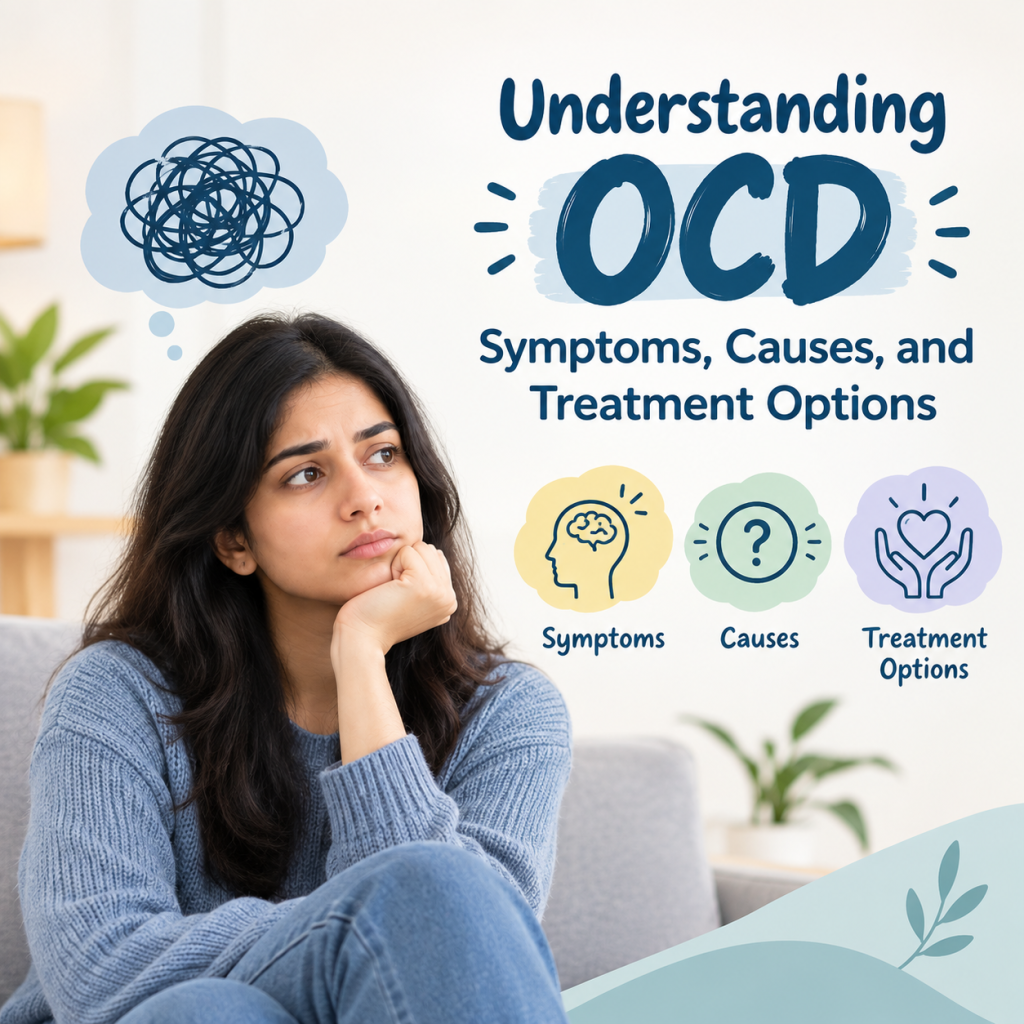
Obsessive-Compulsive Disorder (OCD) is a mental health condition that can affect a person’s thoughts, emotions, daily routine, and relationships. Many people experience unwanted thoughts or feel the need to repeat certain actions, but OCD goes beyond occasional worries or habits. The symptoms can become difficult to control and may interfere with everyday life.
The good news is that OCD is treatable, and with the right professional support, many people are able to manage their symptoms and lead fulfilling lives.
If you or someone you know is struggling with recurring unwanted thoughts or repetitive behaviors, consulting an OCD Psychiatrist in Bhopal can be an important step toward understanding the condition and exploring suitable treatment options.
What Is OCD?
OCD is characterized by two main types of symptoms: obsessions and compulsions.
Obsessions
Obsessions are recurring, unwanted thoughts, images, or urges that can cause anxiety or distress. A person may recognize that these thoughts are excessive or unreasonable but still find them difficult to stop.
Common examples include:
- Fear of germs, contamination, or illness
- Repeated doubts about whether something was done correctly
- Fear of accidentally harming oneself or someone else
- Excessive concern about making mistakes
- Unwanted or disturbing thoughts
- A strong need for things to feel perfectly arranged or symmetrical
Compulsions
Compulsions are repetitive behaviors or mental acts that a person feels driven to perform in response to an obsession.
Examples may include:
- Washing hands repeatedly
- Checking doors, switches, or appliances again and again
- Repeating certain words or actions
- Counting objects or performing actions in a particular sequence
- Seeking repeated reassurance from others
- Mentally reviewing events or conversations
These behaviors may provide temporary relief from anxiety, but the distress can return, creating a repetitive cycle.
Common Symptoms of OCD
OCD can look different from one person to another. Some people mainly experience intrusive thoughts, while others have noticeable repetitive behaviors.
Some common signs include:
- Persistent unwanted thoughts
- Excessive fear or anxiety related to specific thoughts
- Repetitive checking or cleaning
- Spending a significant amount of time performing rituals
- Difficulty resisting compulsive behaviors
- Avoiding situations that trigger obsessive thoughts
- Repeatedly asking others for reassurance
- Difficulty concentrating because of intrusive thoughts
- Distress or disruption in work, studies, relationships, or daily activities
Having occasional intrusive thoughts or preferences for cleanliness does not automatically mean someone has OCD. A mental health professional can help determine whether symptoms are consistent with OCD or another condition.
What Causes OCD?
There is no single cause of OCD. Research suggests that several factors may contribute to its development.
Genetics
OCD can sometimes run in families. Having a close family member with OCD may increase a person’s likelihood of developing the condition, although genetics alone do not determine whether someone will develop OCD.
Brain and Biological Factors
Differences in brain circuits and chemical signaling may play a role in OCD. Researchers continue to study how these biological factors contribute to symptoms.
Personality and Psychological Factors
Certain patterns of thinking, such as excessive responsibility, perfectionism, or intolerance of uncertainty, may be associated with OCD symptoms.
Stress and Life Events
Stressful experiences may trigger or worsen symptoms in some people. However, stress is not necessarily the sole cause of OCD.
How Is OCD Diagnosed?
OCD is diagnosed through a detailed assessment by a qualified mental health professional.
During an evaluation, a psychiatrist may discuss:
- The type and frequency of unwanted thoughts
- Repetitive behaviors or mental rituals
- How much time symptoms take each day
- The level of distress caused by symptoms
- The effect on work, education, relationships, and daily activities
- Other mental health concerns that may occur alongside OCD
An accurate assessment is important because symptoms of OCD can sometimes overlap with anxiety disorders, depression, or other mental health conditions.
Treatment Options for OCD
OCD treatment is usually based on the individual’s symptoms, severity, preferences, and overall health. Common treatment approaches include psychotherapy, medication, or a combination of both.
1. Cognitive Behavioral Therapy (CBT)
CBT is a commonly used psychological treatment for OCD. A specific form called Exposure and Response Prevention (ERP) is particularly important in OCD treatment.
ERP involves gradually facing situations or thoughts that trigger anxiety while learning to resist performing the usual compulsive response. This process is generally structured and carried out with professional guidance.
2. Medication
Psychiatrists may prescribe medication when appropriate. Certain antidepressant medications, particularly SSRIs, are commonly used in the treatment of OCD.
Medication should only be taken under the supervision of a qualified medical professional. The choice of medication and dosage depends on individual circumstances.
3. Combined Treatment
For some people, combining medication with psychotherapy may be beneficial. Treatment plans can be adjusted over time depending on symptom response and individual needs.
4. Lifestyle and Self-Care
Lifestyle habits cannot replace professional OCD treatment, but they may support overall mental well-being.
Helpful habits can include:
- Maintaining a consistent sleep schedule
- Exercising regularly
- Eating balanced meals
- Practicing relaxation or mindfulness techniques
- Limiting excessive caffeine when it worsens anxiety
- Staying connected with supportive family and friends
- Following the treatment plan recommended by your mental health professional
When Should You Consult a Psychiatrist?
It may be helpful to seek professional support when obsessive thoughts or compulsive behaviors:
- Take up a significant amount of your time
- Cause considerable distress
- Interfere with work or studies
- Affect relationships or social activities
- Make it difficult to complete everyday tasks
- Feel increasingly difficult to control
Speaking with a psychiatrist in Bhopal can help you understand what may be contributing to your symptoms and whether they could be related to OCD or another mental health condition.
Finding an OCD Psychiatrist in Bhopal
Seeking help for OCD is not a sign of weakness. OCD can be a distressing condition, but appropriate treatment can help people understand their symptoms and develop healthier ways of responding to obsessive thoughts and compulsive urges.
If you are experiencing persistent intrusive thoughts, repetitive behaviors, or anxiety that is affecting your daily life, consider consulting an OCD Psychiatrist in Bhopal for a professional evaluation.
Final Thoughts
OCD is more than simply being overly careful, organized, or worried. It is a recognized mental health condition involving obsessions, compulsions, or both, which can significantly affect everyday life.
Understanding the symptoms is an important first step. With professional assessment and appropriate treatment—including therapies such as CBT/ERP and, when suitable, medication—OCD symptoms can often be managed effectively.
If OCD symptoms are interfering with your daily life, reaching out to a qualified psychiatrist in Bhopal can help you explore the right treatment approach for your individual needs.
Frequently Asked Questions
1. What are the common symptoms of OCD?
Common symptoms of OCD include unwanted or intrusive thoughts, excessive fears, repeated checking or cleaning, counting, reassurance-seeking, and other repetitive behaviors or mental rituals. These symptoms can become time-consuming and may interfere with daily life.
2. Is OCD just a habit of being clean or organized?
No. OCD is more than simply liking things to be clean, organized, or arranged in a particular way. People with OCD often experience distressing thoughts or urges and may feel driven to perform certain behaviors to reduce anxiety.
3. What causes OCD?
There is no single cause of OCD. Genetics, brain and biological factors, psychological patterns, and stressful life experiences may all contribute to its development. Having one or more of these factors does not necessarily mean a person will develop OCD.
4. Can OCD be treated?
Yes, OCD is treatable. Treatment may include psychotherapy, particularly Cognitive Behavioral Therapy (CBT) with Exposure and Response Prevention (ERP), medication, or a combination of both. The appropriate approach depends on the individual’s symptoms and needs.
5. Can medication help with OCD?
Certain medications, including some selective serotonin reuptake inhibitors (SSRIs), may be prescribed by a psychiatrist to help manage OCD symptoms. Medication and dosage should always be decided and monitored by a qualified mental health professional.
6. What is ERP therapy for OCD?
Exposure and Response Prevention (ERP) is a form of CBT commonly used for OCD. It involves gradually facing situations, thoughts, or triggers that cause anxiety while learning not to perform the usual compulsive response. ERP is generally carried out with professional guidance.
7. When should I consult an OCD Psychiatrist in Bhopal?
You may consider consulting an OCD Psychiatrist in Bhopal if intrusive thoughts or repetitive behaviors are causing significant distress, taking up a lot of your time, affecting your relationships, or interfering with work, studies, or everyday activities.
8. Can OCD symptoms go away on their own?
OCD symptoms can vary over time, but persistent or worsening symptoms should not be ignored. Professional assessment can help determine whether the symptoms are related to OCD and identify appropriate treatment options.
9. Can stress make OCD symptoms worse?
Stress may increase or worsen OCD symptoms in some people. Managing stress, maintaining healthy routines, and following a treatment plan can support overall well-being, but these steps do not replace professional OCD treatment.
10. How can I find a psychiatrist for OCD in Bhopal?
If obsessive thoughts or compulsive behaviors are affecting your daily life, you can consult a qualified psychiatrist in Bhopal for an evaluation. A mental health professional can assess your symptoms and discuss suitable treatment options based on your individual needs.